

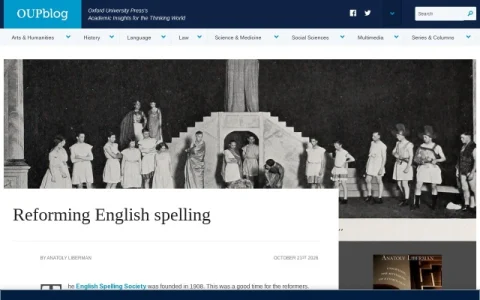
OUPblog is the online magazine of Oxford University Press, offering what it calls academic insights for the thinking world. Rather than publishing press releases, it hosts short essays in which scholars, editors and writers explain a question or argue a position in plain language. The site is organized into broad subject channels covering arts and humanities, history, language, law, science and medicine, technology and social sciences.
The core of the site is its regular columns and series. The Oxford Etymologist, written by Anatoly Liberman, explores word origins; Between the Lines with Edwin Battistella covers language and usage; other recurring features include Word of the Year commentary, publishing advice and themed multi-author series. Multimedia sections add podcasts, quizzes, timelines, maps and videos alongside the written posts.
The blog suits a wide readership: university students looking for accessible entry points into a topic, teachers seeking short discussion material, researchers who want to see how specialists frame arguments for a general audience, and curious general readers. Because posts are brief and opinionated, they are best treated as introductions rather than final authorities.
A practical way to use the site is to follow the subject channels or individual columnists that match your interests, and to use the search and archive to trace how a debate has developed over time. Each post usually points back to a related book or author, which makes it a


Comments & Ratings
0No comments yet. Be the first to review.